
The substantially increased economic dualism may exert lasting negative influences which could include a reduced potential for economic growth; the persistence of a very weak employment and poverty situation; rising social and political discord; and heightened vulnerability to geopolitical challenges, cautions Shankar Acharya, former chief economic adviser to the Government of India.

The final Budget for the fiscal is likely to be tabled in July after formation of the new government.

Days after the Supreme Court held as "illegal" the extension of ED Director Sanjay Kumar Mishra's tenure, the Centre on Wednesday moved the apex court seeking modification of its order to allow him to continue in office till October 15 in view of the ongoing FATF review.
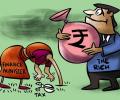
While the tax-to-GDP ratio of 9.88 per cent has been assumed for FY21, the same as last year, when it touched a decadal low, for FY22 a ratio of 10.7 per cent has been assumed, an average of the last five years.

'I'm talking about that predator in your house, and how one should protect one's children from him.'
India's likely medium-term potential growth will almost certainly be markedly lower than that experienced in pre-pandemic years, warns Shankar Acharya, former chief economic advisor to the Government of India.

Reserve Bank of India Deputy Governor Viral Acharya is the eighth economist to quit since the Modi government took office.
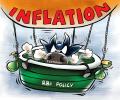
RBI Governor Shaktikanta Das on Friday said that inflation is on a declining trajectory, as it has fallen by 170 basis points from its January 2020 peak. Retail inflation fell to four-month low of 5.91 per cent in March over the previous month, mainly due to easing food prices.

Much of the Q3 data will simply not be available for the CSO to factor in its calculation.
The CSO said that the first revised estimates for 2016-17 have been compiled using industry-wise/institution-wise detailed information instead of using the benchmark-indicator method employed at the time of release of Provisional Estimates on May 31, 2017.

Going forward, the February factory output may be impacted as several industries such as automobiles, technology, pharma and fashion have some exposure to imports of raw and intermediate materials from China.

India's monthly per capita income, the measure of standard of living, is likely to be at Rs 7,378.17.

In a paper, EAC-PM accused Subramanian of "cherry-picking high-frequency indicators" to express his skepticism about the growth rates after 2011-12.
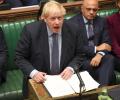
British Prime Minister Boris Johnson on Wednesday announced his government's decision to lift all the additional restrictions imposed to contain the spread of Omicron, including the mandatory wearing of face masks anywhere, from next Thursday after analysis showed that the new variant of Covid-19 has now most likely peaked in the country.
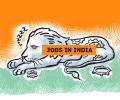
Niti Aayog vice-chairman Rajiv Kumar debunked claims of jobless growth, saying how can a country grow at an average of 7 per cent without employment.

The wholesale price-based inflation accelerated to a record high of 12.94 per cent in May, on rising prices of crude oil and manufactured goods. Low base effect also contributed to the spike in WPI inflation in May 2021. In May 2020, WPI inflation was at (-) 3.37 per cent. This is the fifth straight month of uptick seen in the wholesale price index (WPI)-based inflation. In April, 2021, WPI inflation hit double digit at 10.49 per cent. "The annual rate of inflation, based on monthly WPI, was 12.94 per cent for the month of May, 2021 (over May, 2020) as compared to (-) 3.37 per cent in May 2020.
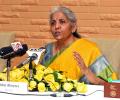
Macroeconomic management is usually a lot more comfortable with lower fiscal deficits. The sooner we get there, the better for the economy, says former Chief Economic Adviser to the Government of India Shankar Acharya.

The announcement means no fans will be allowed from Saturday at the horse racing in Goodwood as well as the Crucible Theatre for the World Snooker Championships.

India's GDP is estimated to contract by a record 7.7 per cent during 2020-21 as the COVID-19 pandemic severely hit the key manufacturing and services segments, as per government projections released on Thursday. Amid overall decline in economic activities, some respite was provided by the agriculture sector and utility services like power and gas supply, which have been projected to post positive growth during the current fiscal ending March 2021.

It's meant to be a corporate rah-rah to encourage office bonding and bonhomie. But is it really, asks Kishore Singh.

The Reserve Bank's growth projection for next financial year is lower than 8-8.5 per cent projected by the finance ministry in the recent Economic Survey which was tabled in Parliament on January 31. Unveiling the bi-monthly policy, RBI governor Shaktikanta Das said, "Recovery in domestic economic activity is yet to be broad-based, as private consumption and contact-intensive services remain below pre-pandemic levels."

Rajan, who has also served as chief economist at the International Monetary Fund (IMF), said he had no idea what statistics are pointing at currently and "a revamp" was needed "to really figure out what India's true growth rate is".

The common man in India is bogged down by corruption and there is a need to fix accountability at all levels, the Supreme Court observed on Friday as it dealt with a petition seeking debarment of those against whom charges have been framed in criminal cases from contesting elections.
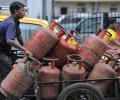
Only 48.3 per cent of the rural households used LPG, while the figures were much higher in urban areas at 86.6 per cent, according to a NSO report.

A day after masked goons entered Jawaharlal Nehru University and ran riot, injuring over 36 people with sticks, lathis and hammers, noted economist and professor C P Chandrasekhar resigned from a Narendra Modi government-appointed committee on statistics. The committee was set to hold its first meeting to review India's economic data. In his resignation letter, Professor Chandrasekhar wrote, "I regret to inform you that because of the situation in JNU where I stay, I will be unable to attend tomorrow's meeting." He was also quoted as saying, "The JNU's incident on Sunday has further undermined the faith in the system. It shows that we are now living in a different world and it's hard to work with a government in which you have lost faith."

Constituencies that are going to the polls in the first phase, slated for April 19, have just 19 days for campaigning. Contrast that with those going to polls in the 7th phase, notes N Sathiya Moorthy.
India's economy grew by 1.6 per cent in the fourth quarter of 2020-21, restricting the full-year contraction to 7.3 per cent, official data showed on Monday. The fourth quarter growth was better than the 0.5 per cent expansion in the previous October-December quarter of 2020-21. The gross domestic product (GDP) had expanded by 3 per cent in the corresponding January-March period of 2019-20, according to data released by the National Statistical Office (NSO).

Risk aversion is currently a dominant depressant to economic recovery, points out Shankar Acharya, former chief economic advisor to the Government of India.

After contracting for two quarters in a row, the Indian economy entered the positive territory with a growth of 0.4 per cent in the October-December quarter, mainly due to good performance by farm, services and construction sectors, official data showed on Friday. Trade and hotel industry registered a contraction of 7.7 per cent during the third quarter this fiscal, as the sectors continued to suffer on account of coronavirus pandemic. According to the data released by the National Statistical Office (NSO), the farm sector recorded a growth of 3.9 per cent, and the manufacturing sector output grew by 1.6 per cent in the quarter under review.
N R Bhanumurthy, professor of economics at the National Institute of Public Finance and Policy, and the author of the series, presented in a report to the National Statistical Commission, explains to Abhishek Waghmare various aspects of the methodology.

One in five students drop out from school.
Crisil Research expects retail inflation to rise 60 basis points to 4 per cent this fiscal from 3.4 per cent in 2018-19.

If the government cuts wasteful expenditure as it is trying now, the deficit would at most fall to 8 per cent, not less than that.

Prices have continued to move up in Delhi's markets, wholesale and retail, on supply worries and spoilage due to record cold weather.

'The minute I tell couples to use condoms or suggest permanent birth control, they ignore it or just change the topic.'

A total of 415 million people moved out of poverty in India within just 15 years from 2005/2006 to 2019/2021, the United Nations said on Tuesday, highlighting the remarkable achievement by the world's most populous nation.

Downing Street also said that the Winter Plan will set out how people will be able to see their loved ones at Christmas, adding that ministers will be warning that this will not be a normal festive period.

The most serious recommendations to change the financial year came in the years preceded by deficient rainfall. The Jha committee was formed after droughts in 1979-80 and 1982-83, reports Rishika Pardikar/IndiaSpend.

'We are looking at the Budget with the hope that it will address all issues even at the cost of exceeding the fiscal deficit target.'

The Indian economy appears to have slowed down in 2018-19 due to lower private consumption, tepid growth in fixed investment and muted exports, a finance ministry report has said.
